The RevList by Revlis
Revlis vs Notion for Social Media Management: Which Tool Is Better for Social Media Managers?
Revlis vs Notion for social media management. Compare content planning, approvals, competitor research, analytics, and workflows.
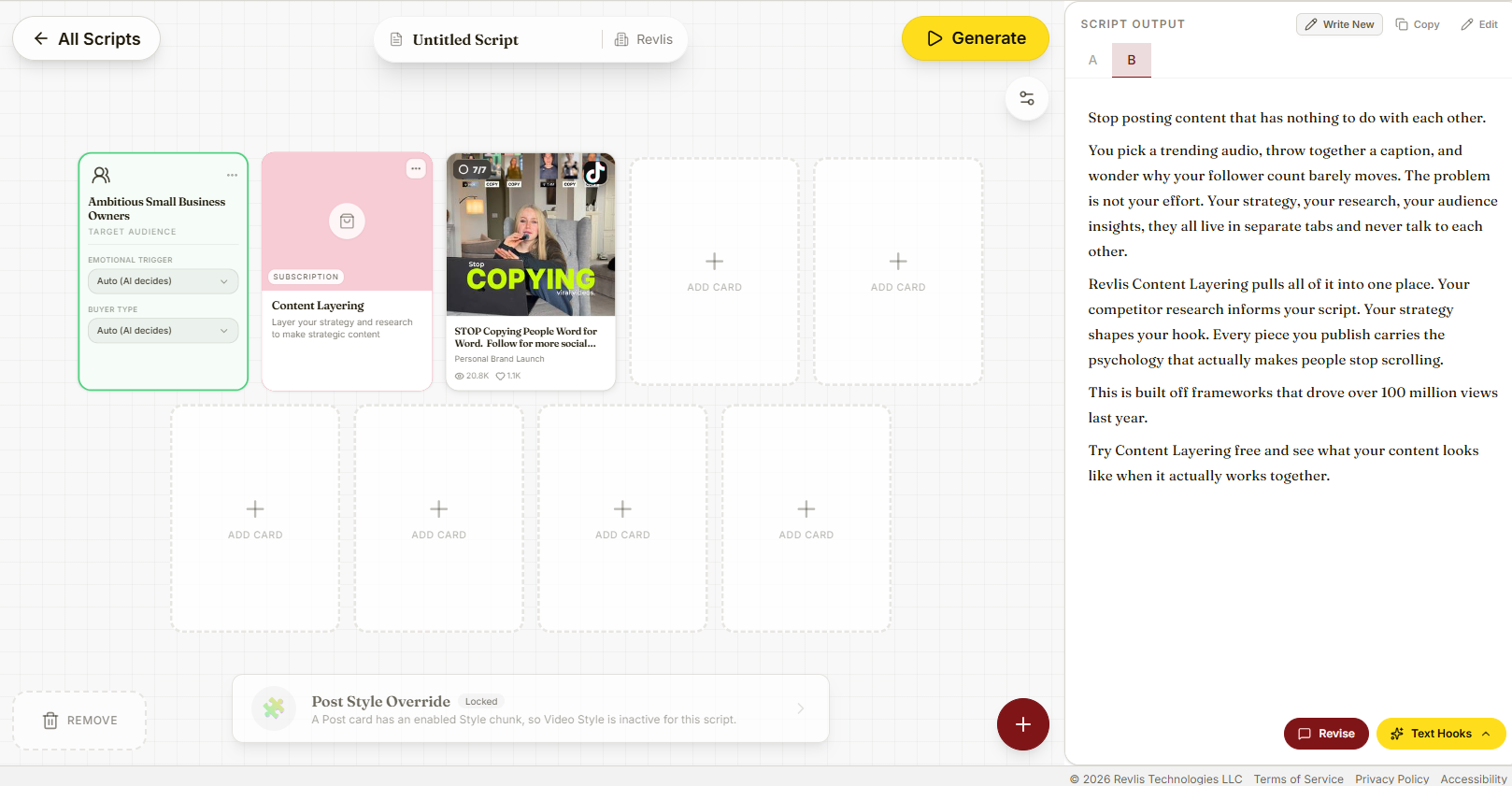
If you search for tools to manage your social media workflow, there's a good chance Notion will be one of the first recommendations you come across.
And for good reason.
Notion is one of the most flexible pieces of software available today. Many people use it for project management, documentation, client portals, content calendars, onboarding, SOPs, and countless other workflows.
But flexibility isn't always the same thing as specialization.
So which platform is better?
The answer depends on whether you're looking for a flexible workspace or a dedicated social media operating system.
Let's break it down.
Competitor Research & Viral Video Analysis
One of the biggest limitations of Notion is that it doesn't actually generate information.
It stores information.
If you're researching competitors in Notion, you're typically collecting links, screenshots, notes, and observations manually. You might save a viral TikTok, paste it into a database, add a few notes about why you think it worked, and organize it into a content inspiration board.
While this creates a useful archive, the analysis still depends entirely on you. Notion can store a viral video but it can't explain why that video went viral.
Revlis takes a completely different approach. Instead of simply saving competitor content, Revlis is designed to analyze it. Users can track competitors directly by username, research content by keyword, or paste individual video links into the platform. Once a video is added, Revlis breaks it down into the components that actually matter.
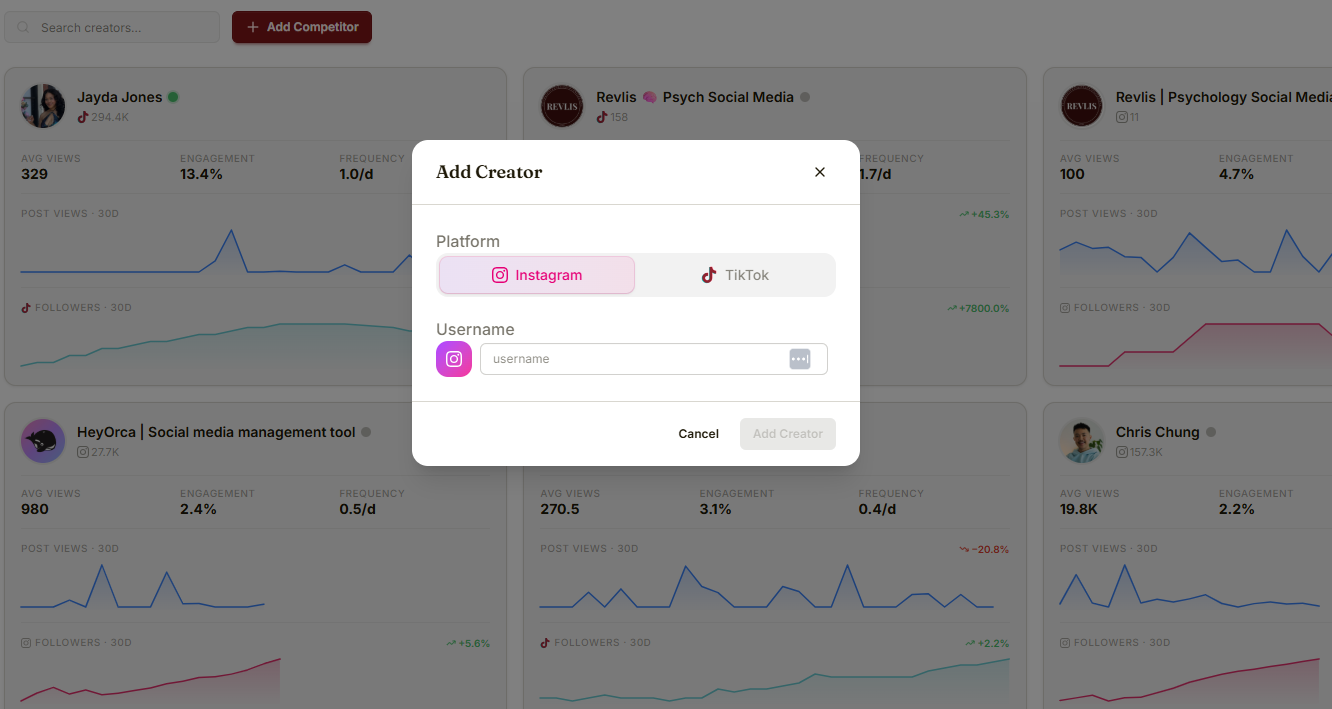
Rather than staring at a link and trying to reverse engineer the content yourself, you can see:
The hook strategy
Content structure
Psychological triggers
Call-to-action framework
Conversion elements
Content category
Performance metrics
Replication opportunities
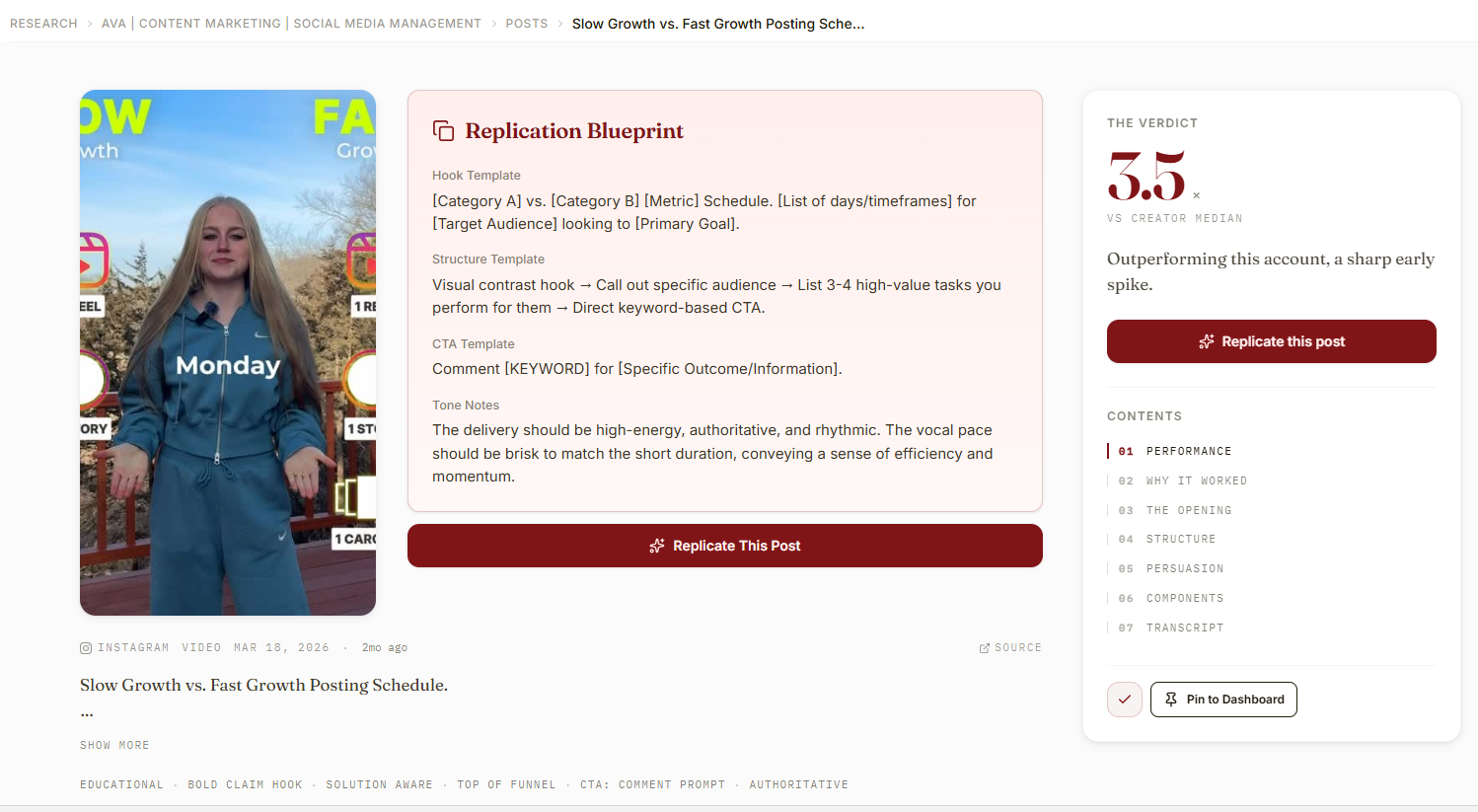
This transforms competitor research from a manual process into a strategic one.
For example, imagine you discover a TikTok with 2 million views in your niche.
In Notion, you would likely save the link and write your own notes about why you think it performed well.
In Revlis, the platform analyzes the video and identifies the specific elements contributing to its performance. You can then take those insights and send them directly into script creation workflows, making it easier to adapt proven structures without copying content.
This is one of the clearest examples of the difference between a general-purpose workspace and software built specifically for social media managers.
Notion helps you organize research.
Revlis helps you perform research.
And when you're managing multiple clients, that distinction can save hours of work every single month.
Content Planning
Content planning is one of the most common reasons social media managers use Notion.
With enough customization, you can build databases for content pillars, audience research, campaign tracking, content ideas, and publishing schedules. For many freelancers and small teams, this works extremely well.
The challenge is that you're responsible for building everything yourself.
Every database, relationship, property, template, and workflow has to be designed, connected, and maintained. What starts as flexibility can eventually become another system that requires ongoing management.
Revlis approaches content planning differently.
Because the platform was built specifically for social media managers, many of the planning components already exist. Target audiences, content pillars, value propositions, psychology tactics, focus questions, and brand strategies are all designed to work together instead of being assembled manually. As seen in the image below, you can add deliverables or different layers quickly and easily from pre-built elements.
This means less time building workflows and more time using them.
For social media managers who enjoy creating highly customized systems, Notion offers nearly unlimited flexibility.
For those who want a planning system already designed around social media strategy, Revlis provides a much more structured experience.
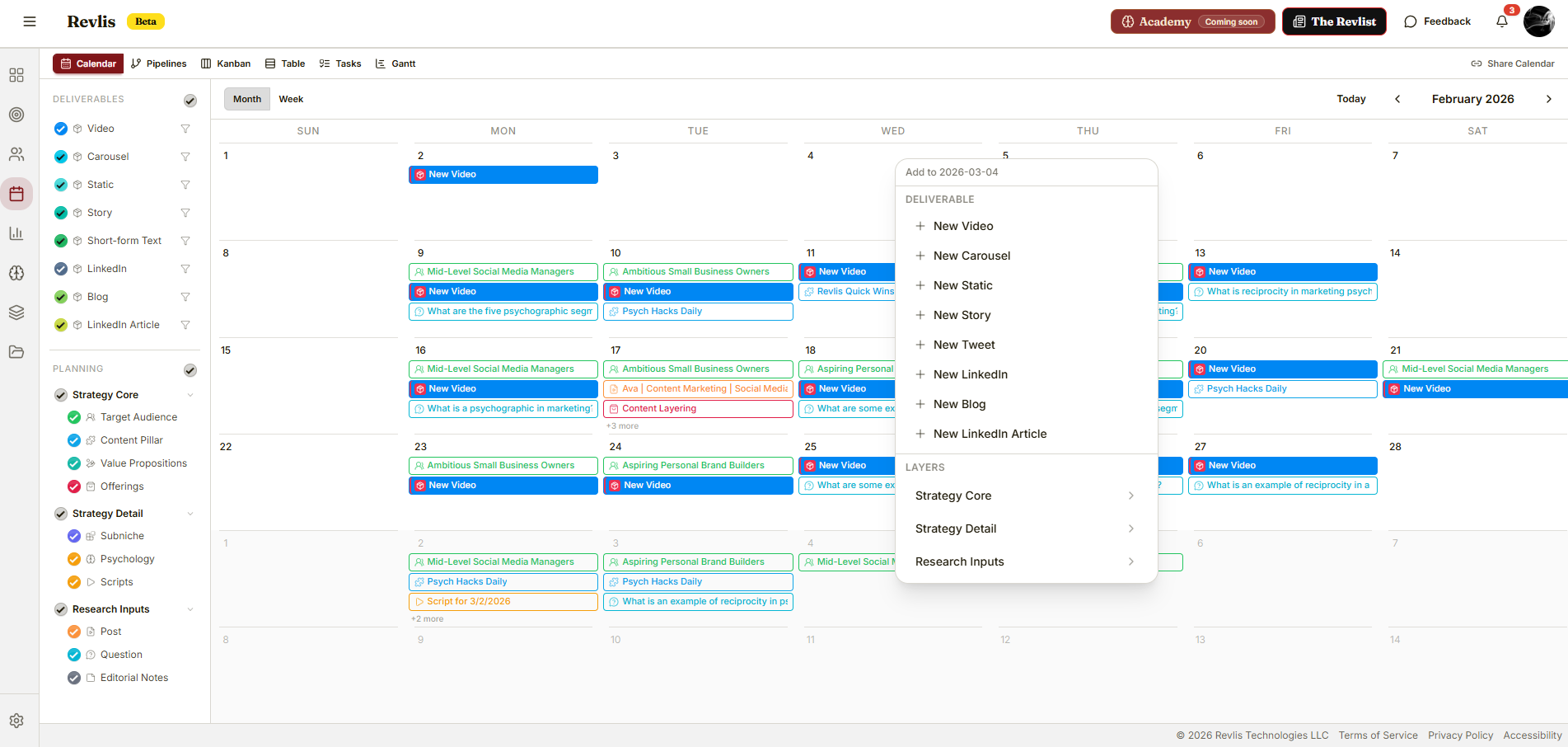
Content Calendars
Notion's content calendars are incredibly popular.
You can create editorial calendars, campaign calendars, publishing schedules, and virtually any other calendar structure you can imagine. The flexibility is impressive, but it also means the calendar itself doesn't inherently understand social media workflows.
A content calendar in Notion is still fundamentally a database.
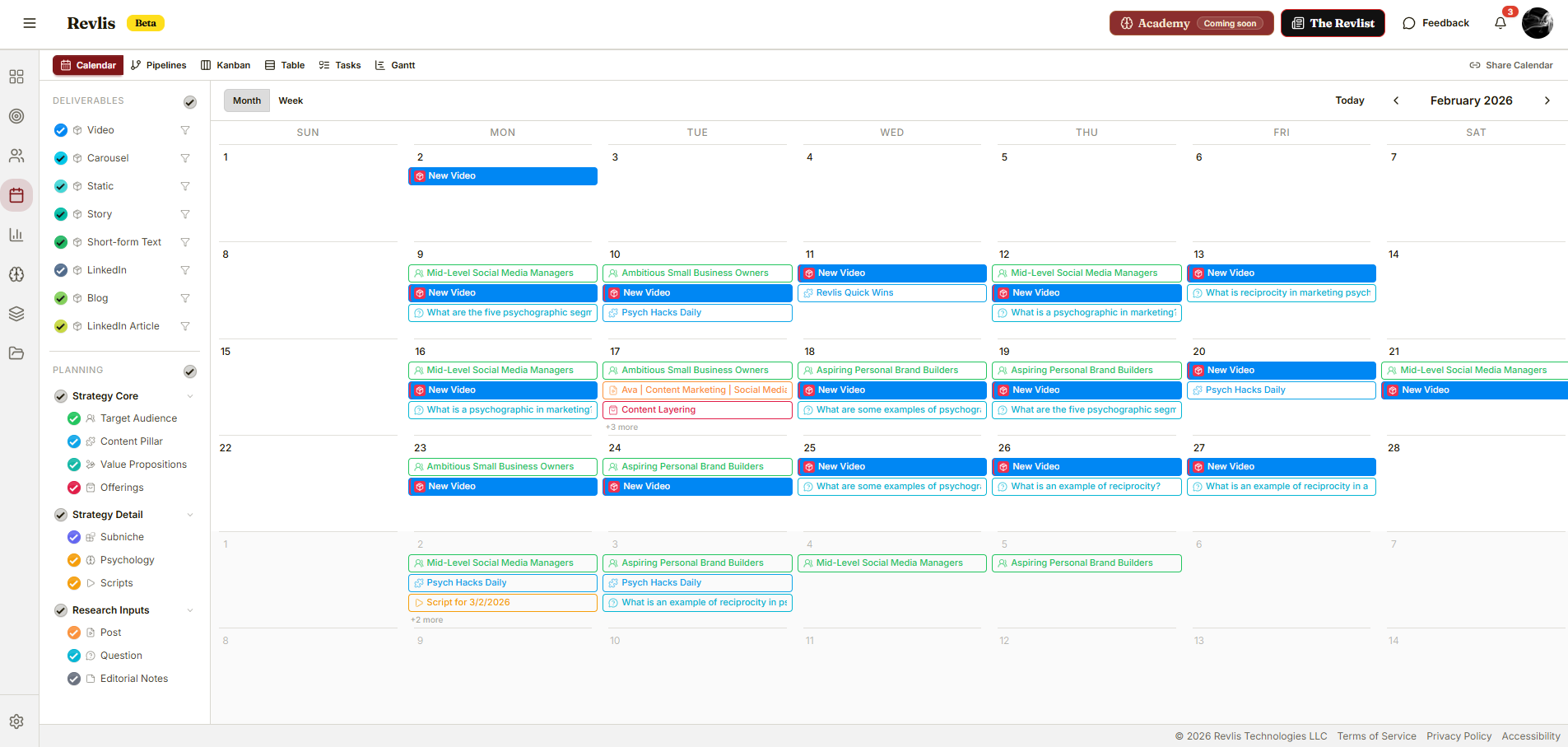
Revlis was built from the perspective of a social media manager managing content production.
Instead of simply seeing what is scheduled, you can see where content sits within the workflow. Is it a video, carousel or story? Is it still a concept? Is the script being written? Is it being edited? Is it waiting for client review?
For agencies managing dozens or hundreds of pieces of content each month, understanding where content sits is often just as important as knowing when it will be posted.
This is one of the key differences between a general-purpose workspace and software designed specifically for social media operations.
Script Creation
One of the biggest differences between Notion and Revlis is what happens after you've finished your research.
In Notion, research and content creation are separate processes. You can save competitor posts, audience insights, and content ideas, but when it's time to create content, you still have to connect everything yourself.
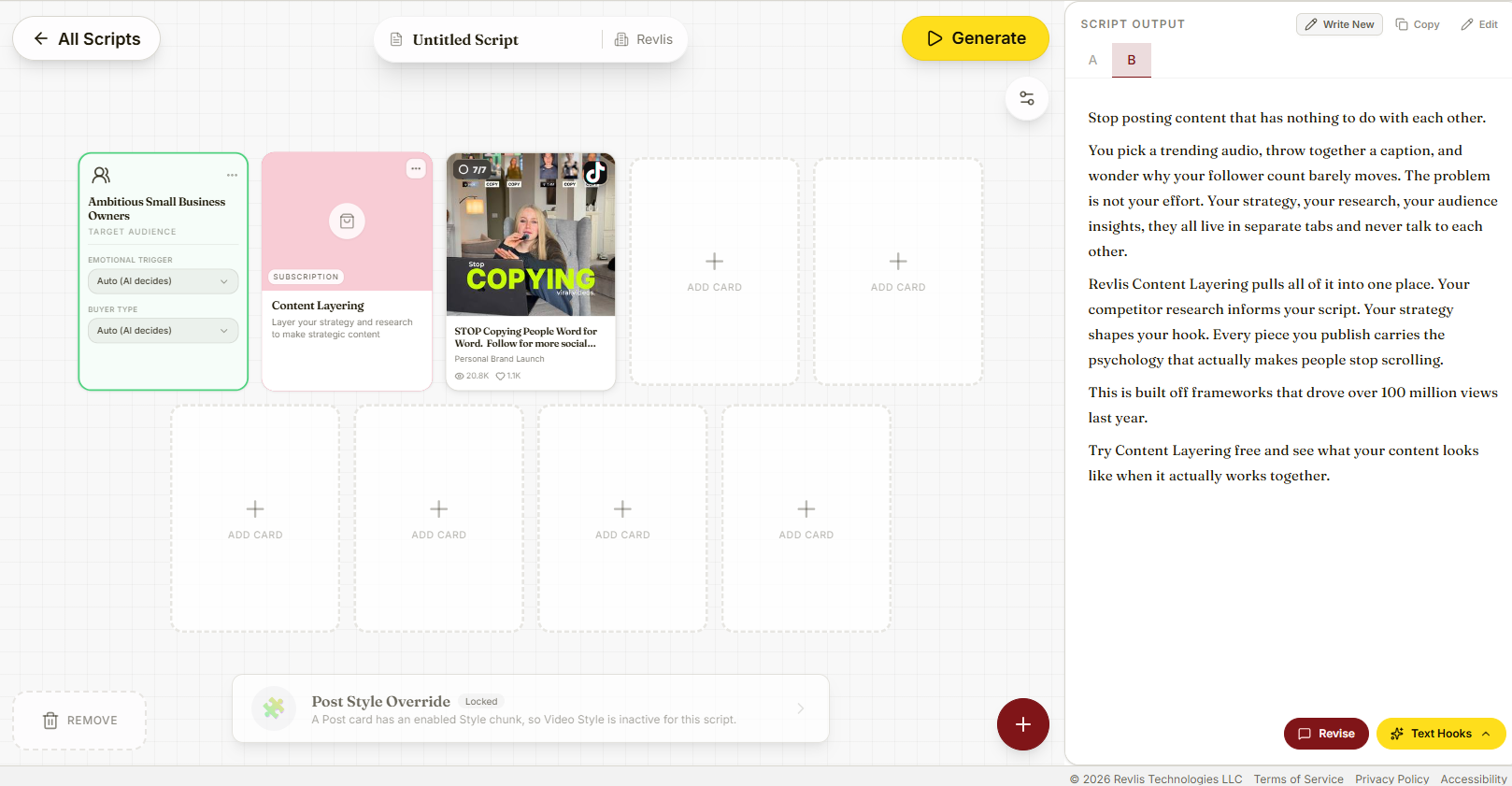
Revlis brings those pieces together.
When generating a script, you can pull from:
Target audiences
Content pillars
Focus questions
Value propositions
Psychology frameworks
Competitor research
Viral video breakdowns
Offerings and benefits
Hooks and creator inspiration
Instead of generating content from a generic prompt, Revlis uses the strategy and research you've already built inside the platform.
For example, if you discover a viral competitor video, you can send that research directly into the script workflow. Revlis can use the video's structure, audience insights, and psychological triggers to help generate a new piece of content without simply copying the original.
The platform also supports multiple content formats, including educational videos, storytelling content, voiceovers, skits, clone skits, and custom styles.
While Notion helps you organize information, Revlis helps you turn that information into content. For social media managers creating content at scale, that can eliminate hours of manual work every week.
Approval Workflows
This is where many social media manager begin to feel the limitations of Notion.
Can you create approval workflows in Notion?
Absolutely.
Can you create client review systems?
Yes.
Can you build custom approval processes?
Also yes.
But every one of those systems has to be built and maintained and is difficult to do.
Because Notion serves so many different industries, it doesn't assume how your content approval process should work. That's great for flexibility, but it often creates additional work for agencies.
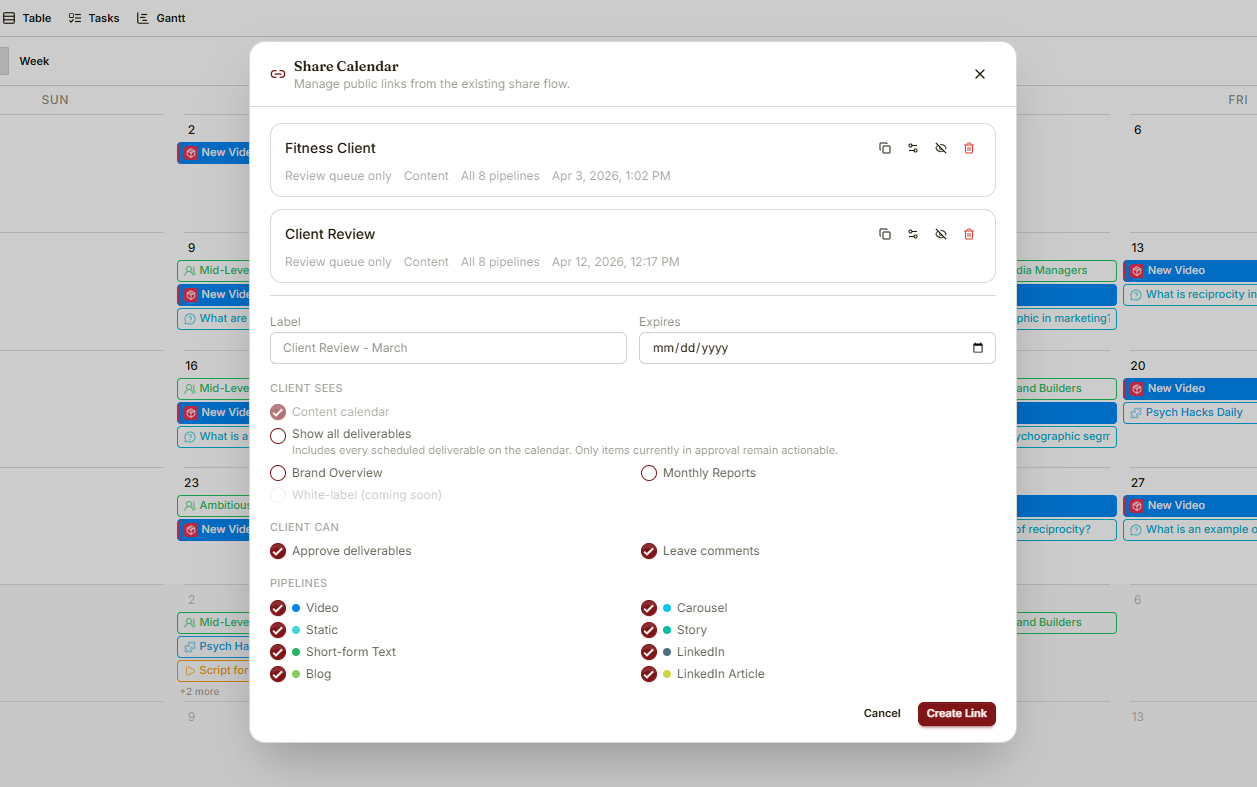
Revlis was built with content approvals as part of the workflow itself.
Instead of creating complex permissions or teaching clients how to navigate a workspace, agencies can simply generate a shareable link and send it directly to a client. You can adjust what deliverables the client sees, what permissions they have, and what pipelines they should have access to.
The client doesn't need to create an account.
They don't need to learn a new platform.
They don't need a login.
They simply open the link, review the content, leave comments, approve it, or request revisions.
For social media manager managing multiple clients, reducing friction during the review process can save an enormous amount of time.
Analytics Tracking
Analytics is another area where many social media managers eventually outgrow Notion.
Notion is excellent at storing information.
It is less effective at helping users generate insights from that information.
Most agencies using Notion for analytics still need to manually collect metrics, organize reports, and identify trends themselves.
Revlis approaches analytics from a strategic perspective. You can connect your accounts directly within Revlis and it will keep track of your analytics, break down which videos performed, which ones didn't, and allow you to make strategic decisions on what next steps look like.
The goal isn't simply to store numbers. The goal is to understand why content performed the way it did and use those insights to improve future content. This philosophy aligns with the broader difference between the two platforms.
Notion provides the framework. Revlis provides a workflow specifically designed around social media growth and performance.
Pricing
Notion is one of the most affordable software platforms available. Its free plan is generous, and its paid plans provide tremendous value for the flexibility they offer. For freelancers, creators, and small businesses, that affordability is difficult to beat.
Revlis is a specialized platform built specifically for social media managers. Rather than paying for a tool that can be adapted to social media management, users are investing in software designed around that workflow from day one as well as speed.
The pricing comparison ultimately comes down to the value of specialization.
If you're looking for a flexible workspace that can serve dozens of different purposes, Notion is an excellent choice. If social media management is a core part of your business, specialized software often creates more value over time.
Which Tool Is Best?
The biggest difference between Revlis and Notion isn't a feature.
It's philosophy.
Notion is designed for everyone.
Social media managers use it.
Software developers use it.
Consultants use it.
HR teams use it.
Startups use it.
Its goal is to be flexible enough for every industry.
Revlis is designed for one specific type of user: social media managers and people wanting to grow on social media.
Instead of giving you a blank workspace and asking you to build a system, it provides a workflow built around strategy, research, content planning, approvals, deliverables, and performance analysis.
If you enjoy building custom systems and need a tool that can support countless business functions, Notion remains one of the most powerful platforms available. But if you're looking for software that already understands the social media management process, Revlis is the better fit.
Notion is a workspace. Revlis is a social media operating system.
And for many social media managers, that's the difference between managing content and managing growth.
FAQ
Is Notion good for social media management?
Notion can be an excellent tool for social media management, especially for freelancers and small teams. It can be customized for content calendars, planning, documentation, and project management. However, because Notion is a general-purpose workspace, most social media workflows must be built manually. Platforms like Revlis take a more specialized approach by providing competitor research, content planning, script generation, client approvals, and analytics tools designed specifically for social media managers.
Can Notion be used for social media content approvals?
Yes, but most agencies need to build their own approval process using shared pages, comments, permissions, and custom workflows. Revlis was designed with content approvals in mind, allowing agencies to send review links directly to clients so they can approve content, request revisions, and leave feedback without creating an account.
What is the best Notion alternative for social media managers?
The best Notion alternative depends on your workflow. If you need a flexible workspace for documentation and project management, Notion remains a strong option. However, if your primary focus is social media management, Revlis is built specifically for that purpose. Unlike Notion, Revlis includes social media strategy tools, competitor research, viral video analysis, script generation, content planning, client approvals, and performance tracking in a single platform.
What software is better than Notion for managing multiple social media clients?
Notion can be customized to manage multiple clients, but agencies often need to create and maintain their own systems for content planning, approvals, research, and reporting. Revlis was built specifically for agencies and social media managers, making it easier to organize client strategies, competitor research, deliverables, approvals, and performance tracking within a single workflow.
Turn psychology into content that converts.
Explore the platform behind The RevList and start building smarter campaigns.